
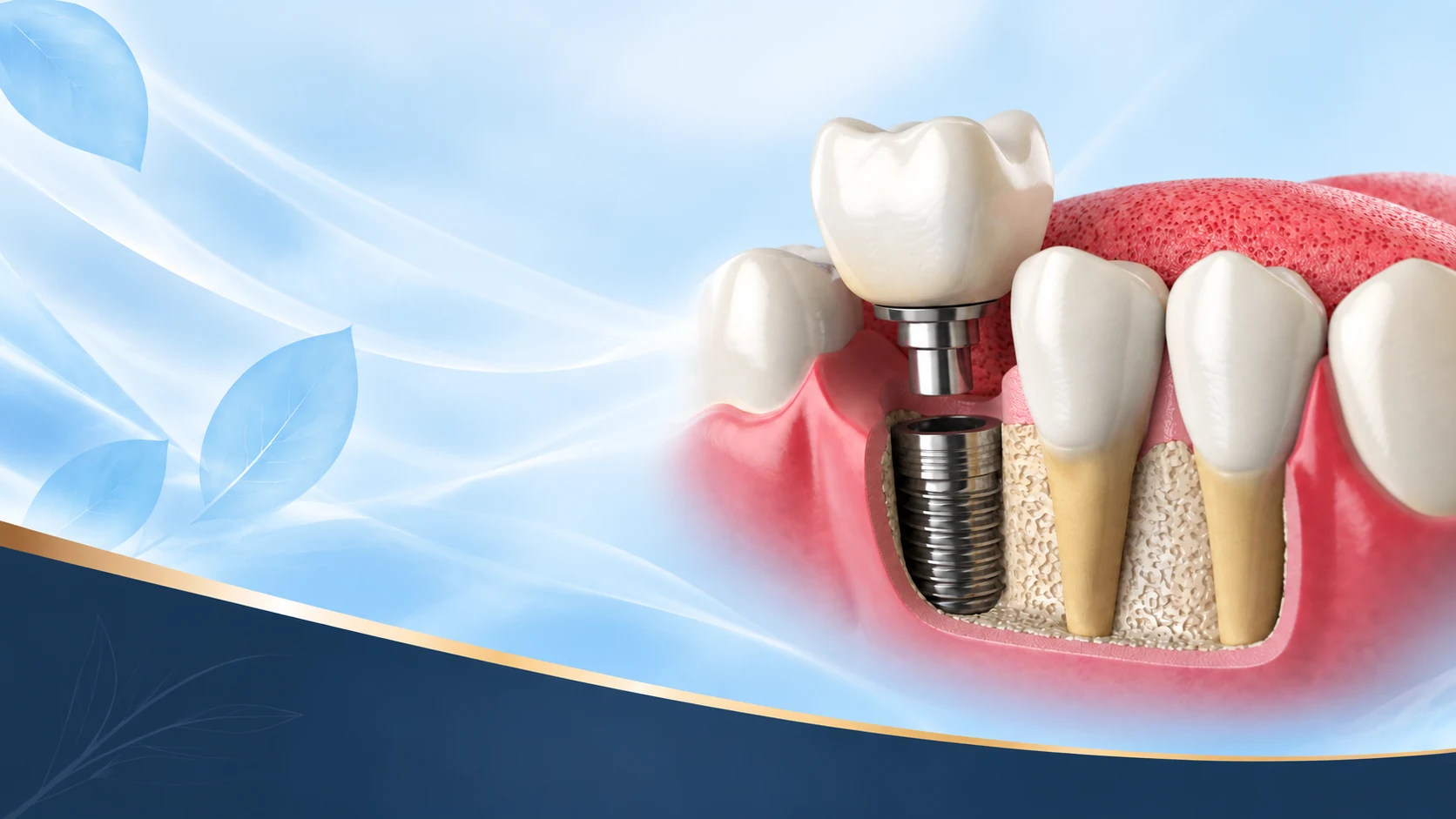
Replace Missing Teeth With Dental Implant Care Planned and Completed In-House
Peoria Dental Care provides comprehensive dental implant care in Peoria, including single-tooth implants, implant-supported bridges, implant-supported dentures, bone grafting when needed, and implant planning and restoration.
Dental implants are one of the ways dentistry can replace missing teeth while creating support from the jawbone rather than relying only on neighboring teeth or removable appliances. An implant is placed in the bone and can support a single replacement tooth, a bridge, or certain types of implant-supported dentures.
At Peoria Dental Care, implant care is handled within the practice. Our dentists provide implant consultation and planning, surgical implant placement, bone grafting when it is needed, restoration of the implant, and follow-up care. The right treatment depends on how many teeth are missing, the condition of the gums and bone, the bite, overall health, and the patient's long-term goals.
Dental Implant Options at Peoria Dental Care
Dental implants are not one single treatment. The number and location of missing teeth determine how implants may be used, and each treatment plan is designed around the individual mouth.
Single-Tooth Dental Implants
A single dental implant can replace one missing tooth. The implant acts as the foundation in the jawbone, and a custom restoration is made to replace the visible tooth. Unlike a traditional tooth-supported bridge, a single implant usually does not require the neighboring teeth to serve as anchors.
Implant-Supported Bridges
When several neighboring teeth are missing, implants may be used to support a fixed bridge. This can replace multiple teeth without placing an individual implant for every missing tooth. The number and position of implants depend on the anatomy, bite, span being restored, and the restorative plan.
Implant-Supported Dentures
Implants can also be used to add support and stability to certain denture designs. For patients comparing removable dentures with implant-supported options, the best approach depends on the number of missing teeth, available bone, desired stability, maintenance needs, and treatment goals. Learn more about dentures and partial dentures in Peoria.
Full-Arch Implant Treatment
Patients who need to replace most or all of the teeth in an upper or lower arch require a different type of treatment plan than someone replacing one or several teeth. Peoria Dental Care offers All-on-4 dental implants as a separate full-arch treatment option. The All-on-4 page explains that approach in detail without duplicating it here.
Dental Implant Planning and 3D Imaging
Implant treatment begins with a careful evaluation rather than with the implant itself. Your dentist considers the missing tooth or teeth, remaining teeth, gum health, available bone, bite, restorative space, medical history, and the location of nearby anatomy.
When additional detail is useful, 3D dental X-rays can help the dentist evaluate the jawbone and surrounding structures from multiple angles. Three-dimensional imaging may be especially helpful when reviewing bone dimensions, implant position, nearby nerves, or sinus anatomy. It is used when the additional information can improve planning and is not automatically required for every routine dental visit.
Bone Grafting When More Support Is Needed
After a tooth is lost, the shape and volume of the jawbone can change over time. Some implant sites have enough bone for treatment as they are, while others may benefit from bone grafting before or at the time of implant placement.
Peoria Dental Care performs bone grafting in-house when it is appropriate for the treatment plan. Whether grafting is needed depends on the specific site, the amount and shape of available bone, the planned implant, and the final restoration. A consultation and imaging help determine what is appropriate rather than assuming every implant patient needs the same preparation.
What the Dental Implant Process May Include
Implant treatment is usually a sequence of planning, treatment, healing, and restoration rather than a single appointment. The exact order varies from patient to patient.
- Consultation and evaluation: The dentist reviews the missing teeth, gums, bone, bite, health history, and replacement goals.
- Imaging and treatment planning: X-rays or 3D imaging may be used when they add useful information for implant position and anatomy.
- Site preparation when needed: Extraction, healing, or bone grafting may be part of the plan depending on the condition of the site.
- Implant placement: The implant is surgically placed in the planned position in the jawbone.
- Healing: The implant site is allowed to heal before the final restoration is placed when the treatment plan calls for a staged approach.
- Final restoration: A crown, bridge, or implant-supported prosthesis is made to restore the missing tooth or teeth.
- Maintenance and follow-up: Home care and professional monitoring remain important after implant treatment is complete.
The total timeline can vary widely depending on the number of implants, whether teeth must first be removed, whether grafting is needed, healing, and the type of final restoration. Your dentist can explain the expected stages after evaluating your specific situation.
Who May Be a Candidate for Dental Implants?
Many adults with missing teeth can be considered for dental implants, but candidacy is based on more than the presence of a gap. A useful implant evaluation looks at the biological foundation, the restorative plan, and the patient's ability to maintain the area over time.
- Gums should be healthy or active periodontal concerns should be treated and managed.
- There should be enough bone for the planned implant, or a reasonable strategy for managing a bone deficiency.
- Medical conditions and medications that may affect healing should be reviewed.
- Smoking, vaping, and other nicotine use should be discussed because they can affect healing and long-term risk.
- The bite, clenching, grinding, and available restorative space should be considered.
- The final restoration must be designed so the patient can clean and maintain the tissues around it.
Healthy gums are especially important around implants. Patients with gum disease or a history of periodontal problems may need periodontal care as part of maintaining a healthy foundation for treatment.
Dental Implants, Bridges, and Dentures: What Is the Difference?
Several types of treatment can replace missing teeth, and the visible result is only part of the decision. The options differ in what supports the replacement teeth, whether the restoration is removable, how nearby teeth are involved, treatment time, maintenance, and cost.
- Single dental implant: Uses an implant in bone to support one replacement tooth.
- Implant-supported bridge: Uses implants to support several connected replacement teeth.
- Traditional dental bridge: Uses neighboring natural teeth as supports for a replacement tooth or teeth.
- Full or partial denture: A removable appliance that replaces missing teeth and is supported by oral tissues and, with partials, remaining teeth.
- Implant-supported denture: Uses implants to provide additional support or retention for a denture design.
No single option is automatically best for every patient. Peoria Dental Care can compare the condition of the bone, neighboring teeth, gums, bite, maintenance needs, treatment stages, and personal preferences before recommending a path.
When All-on-4 May Be the Better Conversation
General implant dentistry can replace one missing tooth, several teeth, or provide added support for a larger restoration. When most or all teeth in an upper or lower arch need replacement, the planning changes because the entire arch has to function as one coordinated restoration.
For that reason, Peoria Dental Care maintains a separate All-on-4 service page for patients exploring full-arch replacement. That page focuses specifically on using four strategically positioned implants to support a complete arch of replacement teeth.
Comprehensive Implant Care in One Peoria Practice
One advantage of implant care at Peoria Dental Care is continuity. The current dentists at the practice are capable of providing implant care, and the office can handle the major stages of treatment in-house: consultation, imaging and planning, bone grafting when indicated, implant placement, restoration, and follow-up.
That does not mean every implant case follows the same sequence. Treatment is still individualized, and recommendations depend on anatomy, oral health, medical considerations, and restorative needs. The goal is to develop a plan that makes sense for both the implant foundation and the replacement teeth that will function above it.
Dental Implant Consultations for Greater Peoria
Patients from Peoria, Peoria Heights, Dunlap, East Peoria, Bartonville, and surrounding communities can visit Peoria Dental Care to discuss tooth replacement and dental implant options. Whether you are missing one tooth, several teeth, or are considering a more extensive replacement plan, the first step is an evaluation of the specific space, supporting tissues, bite, and goals.
If a tooth still needs to be removed, we can also discuss tooth extraction and replacement planning together so you understand the available options before making a decision.
Questions Patients Often Ask About Dental Implants
What is a dental implant?
A dental implant is a small implant placed in the jawbone to support a replacement tooth or larger dental restoration. Depending on the treatment plan, implants can support a single crown, a bridge, or certain denture and full-arch designs.
Does Peoria Dental Care place and restore dental implants in-house?
Yes. Peoria Dental Care provides implant consultation and planning, surgical implant placement, restoration, bone grafting when needed, and follow-up care within the practice.
Can one dental implant replace one missing tooth?
Yes. A single implant can be used to support one replacement tooth when the bone, gums, bite, and overall treatment plan are appropriate.
Can dental implants support a bridge or denture?
Yes. Implants can support a bridge when several teeth are missing and can also provide support or retention for certain denture designs. The number and position of implants depend on the individual treatment plan.
What if I do not have enough bone for an implant?
Bone loss does not automatically rule out implant treatment. Peoria Dental Care can evaluate the site and determine whether bone grafting or another treatment approach should be considered.
How long does dental implant treatment take?
The timeline varies. Implant treatment may include extraction, grafting, implant placement, healing, and restoration in different stages. Your dentist can give you a more useful estimate after examining the site and reviewing the treatment plan.
What is the difference between dental implants and All-on-4?
Dental implants can be used in many ways to replace one or more missing teeth. All-on-4 is a specific full-arch concept that uses four implants to support an entire upper or lower arch of replacement teeth.
Do dental implants require special maintenance?
Implants cannot develop cavities, but the tissues around them still need daily plaque control and professional monitoring. The dental team can recommend cleaning methods based on the implant restoration you have.
Schedule a Dental Implant Consultation in Peoria
If you are considering a dental implant or comparing options for a missing tooth, Peoria Dental Care can evaluate the area, explain what is possible, and help you understand the stages of treatment. Contact our Peoria office or call to schedule a consultation.